
Overview of the Atkinson Cycle Method:
The Atkinson cycle is a proven method for improving four-stroke engine thermal efficiency beyond standard structural design limits. It has been deployed with great success in Japanese automobiles to enhance hybrid powertrain efficiency. In conventional four-stroke Otto cycle engines, the Atkinson cycle is typically simulated using variable valve timing mechanisms to delay the closing of the intake valve during the intake stroke.
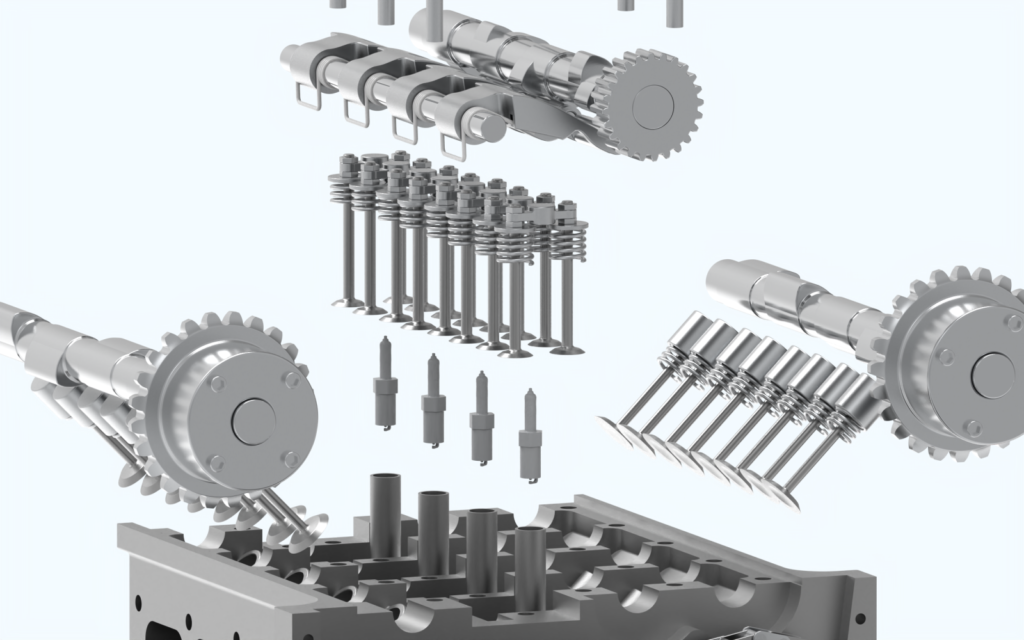
Limitations of Conventional Atkinson Cycle Implementations:
Conventional four-stroke engines simulate the Atkinson cycle using Late Intake Valve Closing, but this approach introduces significant parasitic pumping losses that degrade overall efficiency and performance. By delaying intake valve closure past bottom dead center and into the compression stroke, the upward-moving piston forces a portion of the intake charge back into the manifold. Consequently, the engine expends mechanical energy to draw air into the cylinder and additional energy to expel it during early compression. These pumping losses scale with the degree of late closure, leaving engines with only modest efficiency gains. Furthermore, this reverse air flow actively disrupts the operation of forced induction systems like turbochargers and superchargers, which rely on positive pressure to increase air density. Because forced induction cannot be effectively integrated, late-closing Atkinson engines are largely confined to niche hybrid applications where an electric motor compensates for reduced engine power.
The Dynamic Flow Architecture Advantage via Early Intake Valve Closing:
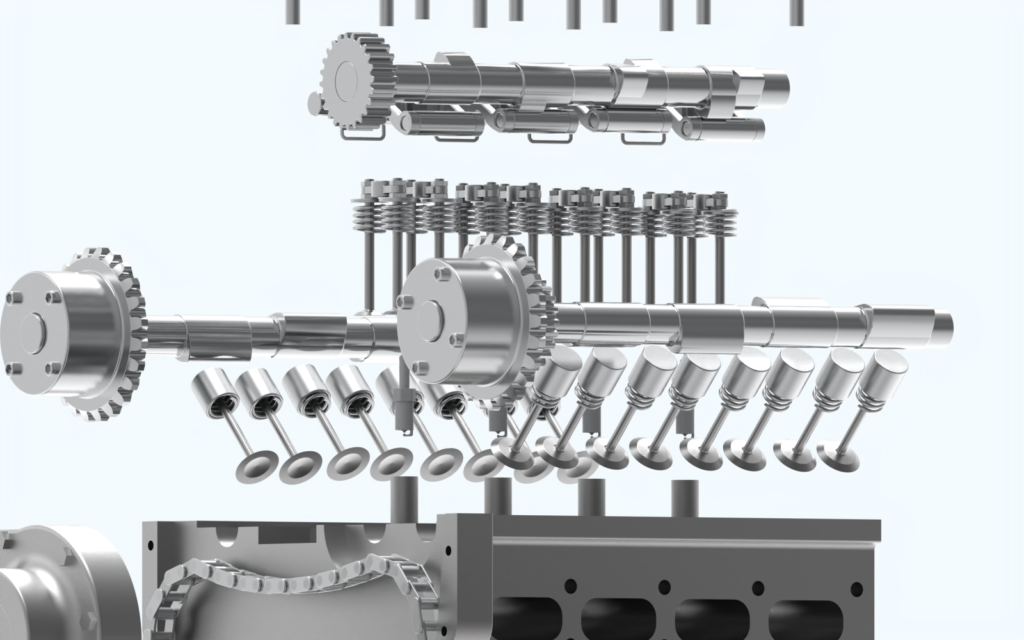
Unlike traditional designs, the Dynamic Flow engine enables the use of Early Intake Valve Closing to achieve the Atkinson cycle. By closing the intake valve early during the intake stroke, air flow from the manifold is cut off cleanly before compression begins. This eliminates the need to push intake air back into the manifold, avoiding the parasitic losses inherent to the late-closing method. As a result, a Dynamic Flow engine operating on an early-closing Atkinson cycle requires far less mechanical pumping energy than conventional Otto, Diesel, or late-closing Atkinson engines, resulting in significantly higher thermal efficiency.
Because early valve closure does not expel air back into the intake system, it completely avoids reverse flow issues and integrates seamlessly with forced induction. Dynamic Flow engines can leverage turbochargers and superchargers just like standard Otto or Diesel engines, and can even transition fluidly between operational modes while maintaining active forced induction. Conventional engine architectures cannot adopt this superior early-closing method due to structural limitations in their valve layouts.
Performance Gains and Future Potential:
By enabling early intake valve closing across both gasoline and diesel platforms, the Dynamic Flow engine overcomes the classic trade-offs of traditional Atkinson implementations. When paired with forced induction, it delivers both higher performance and superior efficiency compared to conventional engines, making it viable for broad automotive and commercial applications rather than just hybrid vehicles.
Simulating the early-closing Atkinson cycle in Dynamic Flow engines can boost thermal efficiency by an additional 12 to 27 percent above its base baseline, pushing total thermal efficiency up to a potential 75 percent—a milestone far beyond the typical 50 percent limit of traditional combustion engines. Furthermore, this adaptable architecture naturally supports multi-fuel operation, ensuring full compatibility with future energy sources such as synthetic fuels, ammonia, and hydrogen.